
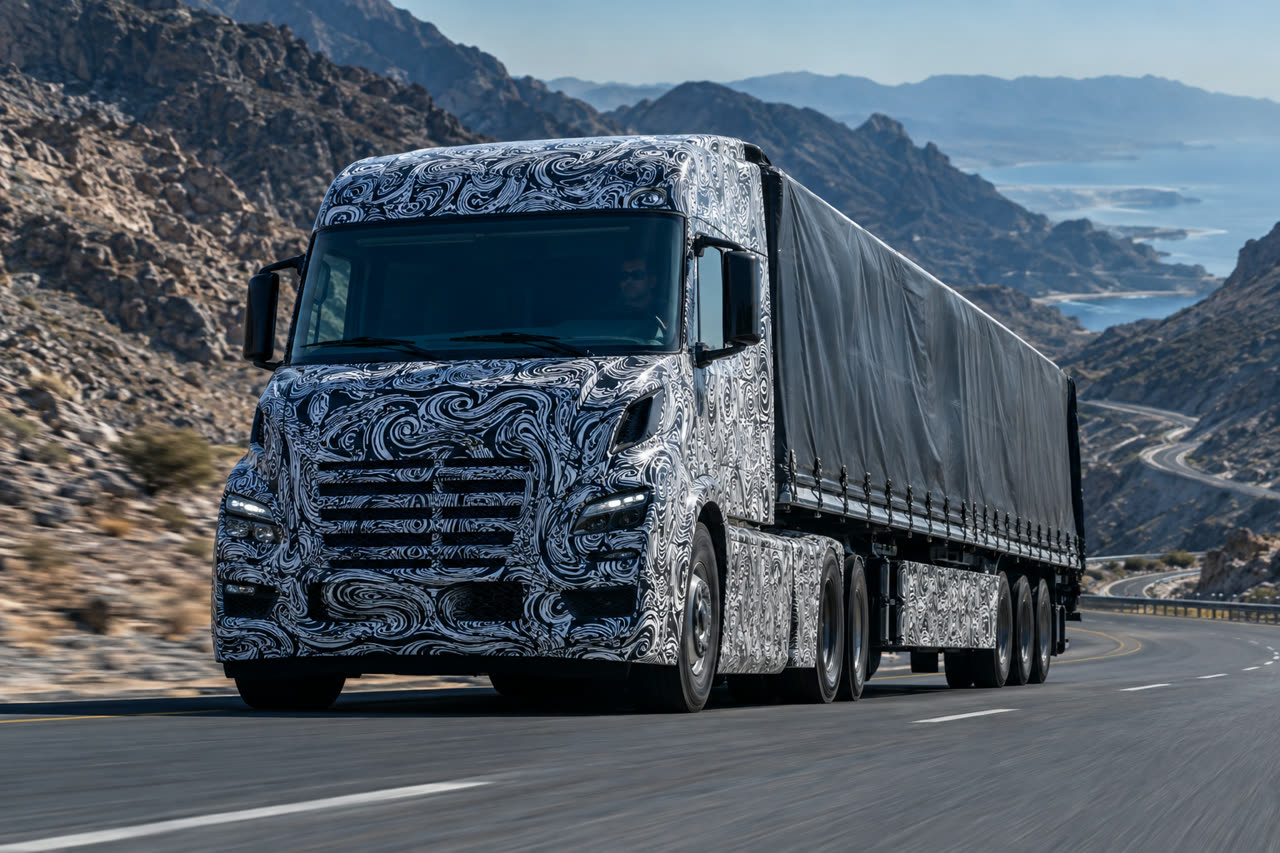
Hydrogen combustion engines are attracting renewed attention across the commercial vehicle industry. The idea is simple: keep the familiar architecture of a piston engine, with its proven manufacturing base and service network, but replace diesel or gasoline with hydrogen. The result promises near-zero carbon dioxide from the tailpipe without the cost and packaging demands of a large battery or a fuel-cell stack. For manufacturers serving heavy-duty, off-highway and long-distance applications, that combination is appealing. The open question is not whether hydrogen burns well in an engine. It does. The question is how these engines hold up over hundreds of thousands of kilometres of real work, and that is a question only real-world driving can answer.
Why H2-ICE Is Not Just a Fuel Swap
On paper, a hydrogen engine looks like a conventional engine with a different fuel system. In practice, hydrogen changes the combustion environment in ways that ripple through the entire engine.
Hydrogen ignites far more easily than conventional fuels and burns very quickly across a wide range of mixtures. That allows efficient lean operation, but it also raises the risk of abnormal combustion: pre-ignition, knock and, in port-injected designs, backfire into the intake. Hot spots that would be harmless with diesel, such as a glowing deposit, a hot exhaust valve or a spark plug running outside its intended heat range, can become ignition sources.
The combustion product is water rather than carbon dioxide. Some of that water vapour inevitably reaches the crankcase through blow-by, where it can condense, dilute the lubricant and promote corrosion and sludge. Hydrogen also offers little lubricity, so injectors, valves and seats operate without the protective film that hydrocarbon fuels provide. And while hydrogen combustion produces essentially no carbon dioxide, nitrogen oxides remain, which makes combustion control and aftertreatment central to compliance.
None of this makes the technology unworkable. It does mean that durability cannot be inferred from the diesel engine it may be based on.
The Duty Cycles That Matter
Hydrogen combustion is being developed mainly for demanding applications: regional and long-haul trucks, construction and mining equipment, buses and specialty vehicles. These are vehicles that work hard for long hours, often in difficult environments.
In the Gulf, that work typically means sustained high load in extreme ambient heat. A loaded truck climbing an extended grade in summer, or idling for long periods at a site with the air conditioning running, puts the engine and its cooling system under continuous thermal stress. Hot cylinder surfaces and hot intake air are precisely the conditions that make abnormal combustion more likely in a hydrogen engine. Real routes also impose frequent load changes, stop-start traffic near cities and long steady cruising between them, each stressing the engine differently.
The refuelling pattern matters too. Where infrastructure is still sparse, vehicles may operate on fixed corridors between a limited number of stations, running tanks lower than operators would choose and spending long periods parked between shifts. Those patterns influence fuel system behaviour, lubricant condition and the moisture balance inside the engine.
What Real-World Driving Reveals
MotogenX validates vehicles exclusively in real-world driving conditions, and hydrogen combustion engines illustrate why. The failure modes of most concern develop gradually and depend on the interaction of heat, load, fuel and time rather than on any single operating point.
A representative programme runs vehicles on real routes that combine sustained highway duty, extended grades, urban stop-start sections and long idle periods, across both peak summer and cooler seasons. Payload is varied to reflect empty return trips as well as fully loaded outbound legs. Mileage accumulates at the pace and pattern customers will actually produce.
Throughout, the engineering signals that matter are recorded together with route and environmental context. Combustion-related events, knock and pre-ignition indicators, coolant and oil temperatures, intake air temperature, NOx behaviour and aftertreatment performance, fuel system pressures and hydrogen consumption all tell part of the story. Periodic oil analysis tracks water content, contamination and additive depletion. Scheduled inspections of spark plugs, valves, seats, injectors and pistons confirm whether wear is progressing as designers expected.
The value lies in correlation. An unexpected combustion event means far more when it can be tied to a particular grade, ambient temperature, payload and preceding duty cycle.
Questions Fleet Operators Will Ask
Early adopters of hydrogen combustion vehicles will be fleets, and fleets measure value in uptime and operating cost. Manufacturers and Tier-1 suppliers should expect pointed questions, and real-world data is the most persuasive answer.
Operators will want to know what oil drain intervals look like under hot-climate duty and whether water accumulation forces more frequent changes. They will ask about the service life of spark plugs, injectors and valve train components compared with the diesel engines they are replacing. They will ask how the vehicle protects itself when abnormal combustion is detected, and how much power it gives up when it does. They will want consumption figures from routes that resemble theirs, not from idealised cycles. And they will want confidence that the vehicle meets emissions requirements after a season of hard work, not only when new.
Closing Thoughts
Hydrogen combustion offers a credible path to low-carbon heavy-duty transport that builds on decades of engine expertise. Its durability challenges, abnormal combustion under heat, moisture in the lubricant, wear without fuel lubricity and NOx control over life, are well understood in principle but only quantified in practice by running vehicles the way customers will. MotogenX supports OEMs and Tier-1 suppliers from Dallas, Dubai, and Riyadh with real-world durability programmes that put hydrogen engines to work on real roads, in real heat, before they reach fleet customers.
MotogenX delivers this expertise through hands-on programs across the GCC. Explore our vehicle durability & endurance testing services — from road load data acquisition and fatigue testing to OEM homologation.