
Range-extender electric vehicles occupy an unusual place in the powertrain landscape. They drive like battery electric vehicles, with an electric motor providing all traction, yet they carry a combustion engine whose only job is to generate electricity once the battery reaches a defined state of charge. On paper this offers the best of both worlds: electric driving for daily use and unrestricted range for long trips. In practice it creates a durability profile unlike any other powertrain, and the long intercity highway drive is where that profile is tested hardest.
How a Range Extender Actually Works on the Road
In most range-extender designs, the vehicle begins a trip in an electric-first mode, drawing on the battery until it reaches a target state of charge. From that point the generator engine starts and runs to sustain the battery, supplying the electrical power the traction motor demands while keeping the pack within its operating window.
Around town, this transition may never happen. The battery covers the daily commute and is recharged overnight. On a long highway drive, the picture changes entirely. Once the battery has been drawn down, the generator becomes the primary energy source for the rest of the journey. It may run for hours at a time, at sustained output, carrying the full energy demand of a vehicle travelling at highway speed.
That is a fundamentally different duty cycle from the one a conventional engine experiences, and from the one a range extender sees in daily urban use. It is also a duty cycle that is easy to underestimate during development.
Why Long-Haul Driving Is the Real Test
A conventional engine on a highway runs at varying load as the driver accelerates, cruises, climbs and descends. A range-extender generator, by contrast, is often operated at a narrower band of speeds and loads chosen for efficiency. When the battery is depleted and the vehicle is cruising at sustained high speed, that operating point can sit at elevated output for very long periods.
Sustained output brings sustained heat. The generator, its exhaust aftertreatment, the inverter and power electronics, the traction motor and the battery all generate heat simultaneously, and all of it must be rejected through cooling systems sized and packaged around a vehicle that was largely conceived as an electric car. In temperate markets this may work comfortably. On a Gulf intercity route in summer, with high ambient temperatures, intense solar load and air conditioning running at maximum, the margins tighten considerably.
Long-haul driving also reveals the interaction between the generator and battery thermal management. If the battery is warm and the cooling loop is shared or closely coupled with the power electronics, the vehicle may need to prioritise one system over another. How the control strategy handles that conflict, whether by reducing generator output, limiting traction power, or adjusting cabin cooling, determines what the driver actually experiences.
Failure Modes That Only Appear Over Real Distance
Several durability concerns are specific to range extenders, and most of them accumulate gradually rather than appearing on a short evaluation drive.
The generator engine itself may see more continuous high-load operating hours on a long-distance duty cycle than an engine of similar size in a conventional vehicle. Bearings, valvetrain, lubricant condition and cooling passages all need to sustain that. Lubricant behaviour deserves particular attention, because range extenders can alternate between long periods of rest and long periods of sustained running, a pattern that can affect oil condition and the effectiveness of protective films after extended shutdown.
Generator start and stop events are another factor. Each transition from electric-only to generator operation is a cold or warm start under conditions chosen by software rather than the driver. Frequent starts on mixed routes, combined with long continuous runs on highway stretches, create a varied stress history for starters, mounts, exhaust components and aftertreatment.
Noise, vibration and harshness evolve with mileage too. Customers who buy a range extender expect an electric driving experience. Engine mounts that soften, exhaust hangers that loosen, or accessory components that develop resonance can make the generator far more noticeable over time, turning a refined vehicle into one that feels unsettled at highway speed.
What a Real-World Long-Haul Programme Looks Like
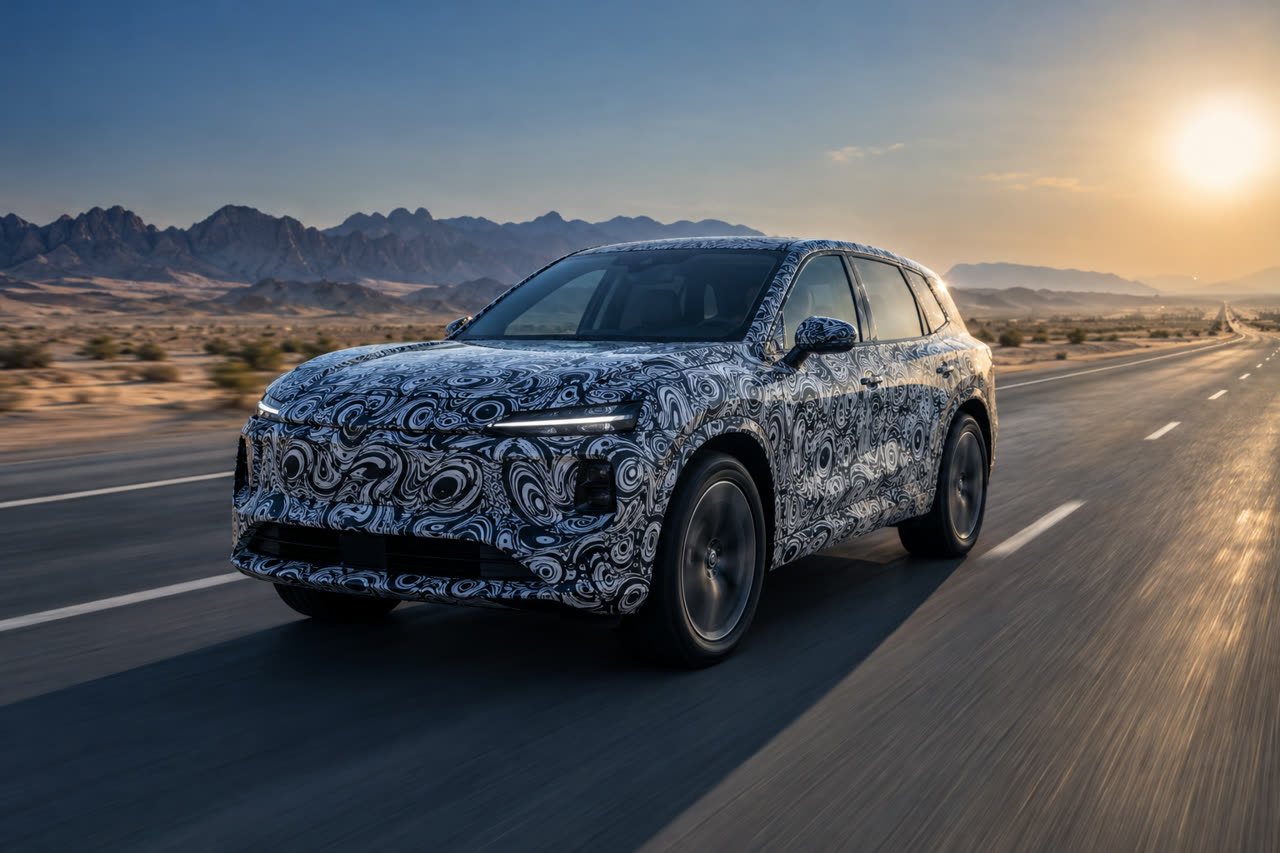
MotogenX validates vehicles exclusively in real-world driving conditions, and long-haul range-extender evaluation is a case where that matters most. The duty cycle that stresses a generator, its cooling systems and its control strategy simply emerges from driving the vehicle the way customers will.
A representative programme combines repeated intercity highway drives in high ambient conditions, long enough to fully deplete the battery and run the generator continuously for extended periods. It includes sustained grades, where generator output and traction demand rise together, and stop-start urban sections where the generator cycles on and off. It varies payload and cabin occupancy, because a fully loaded vehicle with every seat occupied and the air conditioning at full output places very different demands on the energy system than a lightly loaded one.
Throughout, the engineering signals of interest are tracked alongside route and environmental context: generator run time and start frequency, coolant temperatures across each loop, battery temperature and state-of-charge behaviour, power derating events, fuel consumption in sustaining mode, and any fault codes linked to thermal limits or generator operation. Driver observations about noise and refinement complement the data, because perceived quality is part of durability for this class of vehicle.
Questions OEMs Should Answer Before Launch
For manufacturers and Tier-1 suppliers preparing range-extender vehicles for long-distance markets, several questions deserve evidence rather than assumption. Does the cooling system hold its margin when the generator, power electronics and battery are all working hard on a hot highway? How does the control strategy behave when thermal limits are approached, and is that behaviour acceptable from the driver's seat? Is the generator engine specified for the continuous operating hours a long-haul customer will accumulate? And does refinement hold up after tens of thousands of kilometres, or does the generator become intrusive?
Closing Thoughts
Range-extender vehicles are often presented as a bridge between combustion and full electrification, but their durability demands are distinct from either. The long highway drive, battery depleted and generator working continuously in high heat, is where their engineering is truly tested. MotogenX supports OEMs and Tier-1 suppliers from Dallas, Dubai, and Riyadh with real-world long-haul programmes designed to find those limits on the road, well before customers do.
MotogenX delivers this expertise through hands-on programs across the GCC. Explore our vehicle durability & endurance testing services — from road load data acquisition and fatigue testing to OEM homologation.